
-
 USD
Home
/
Semax*10vials
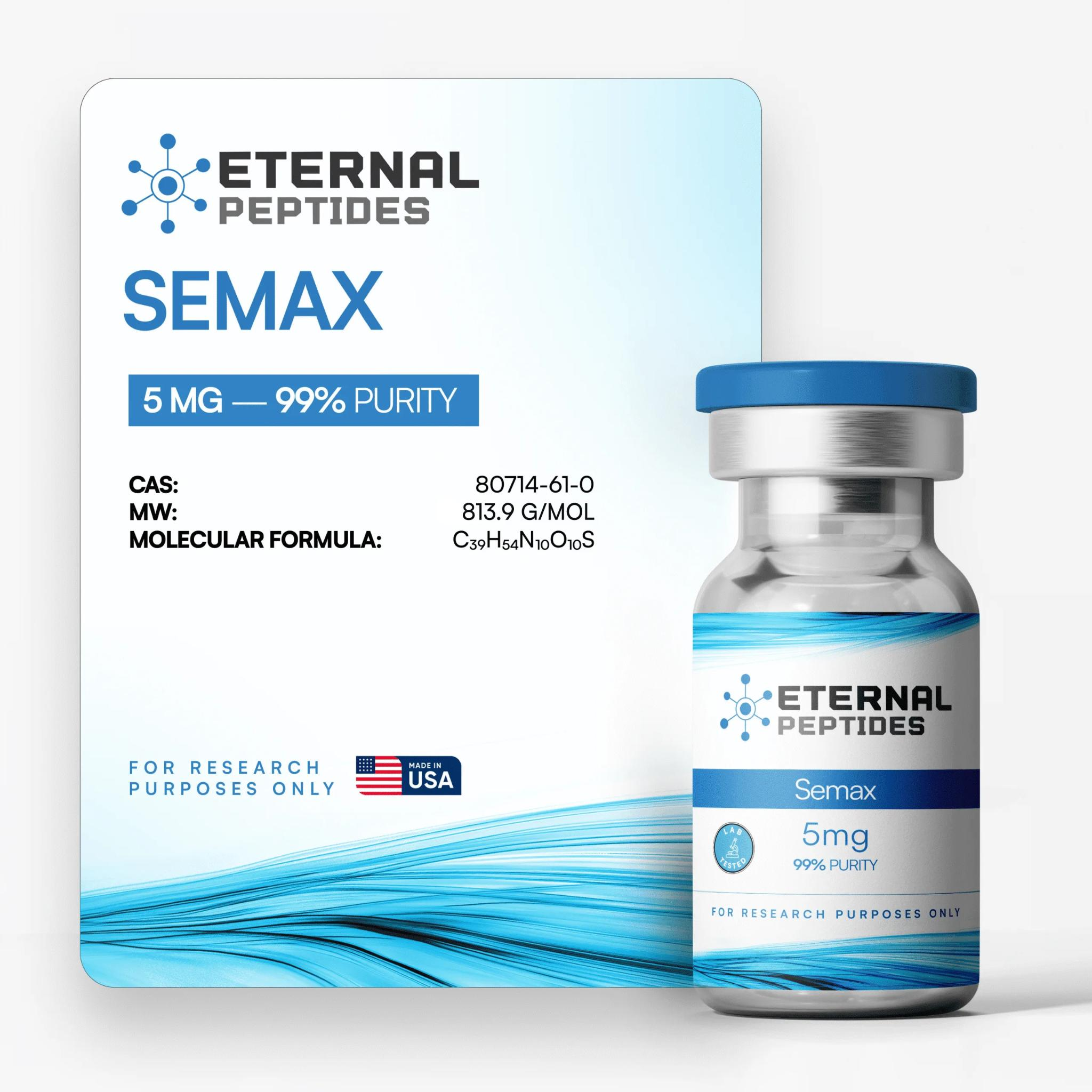
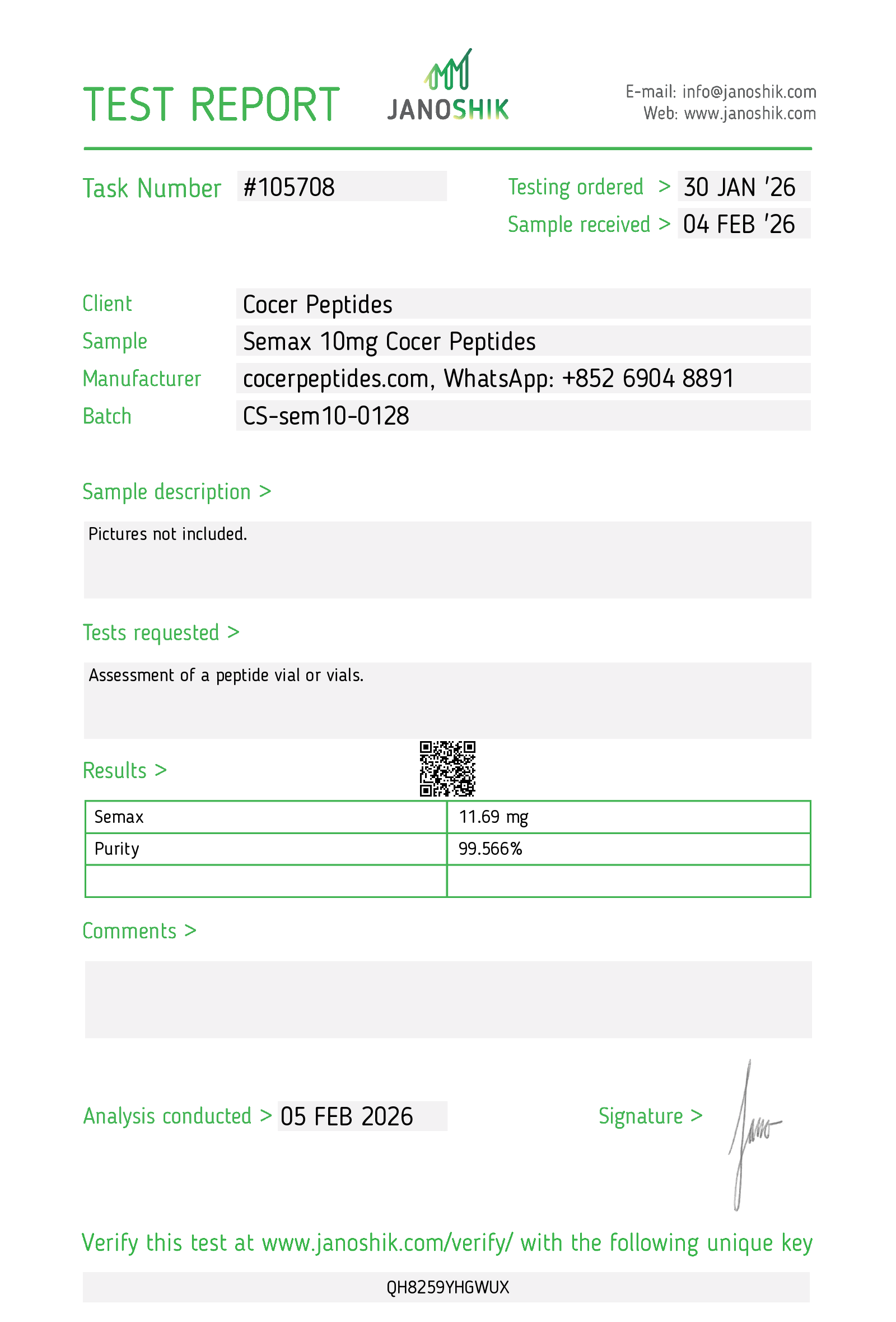
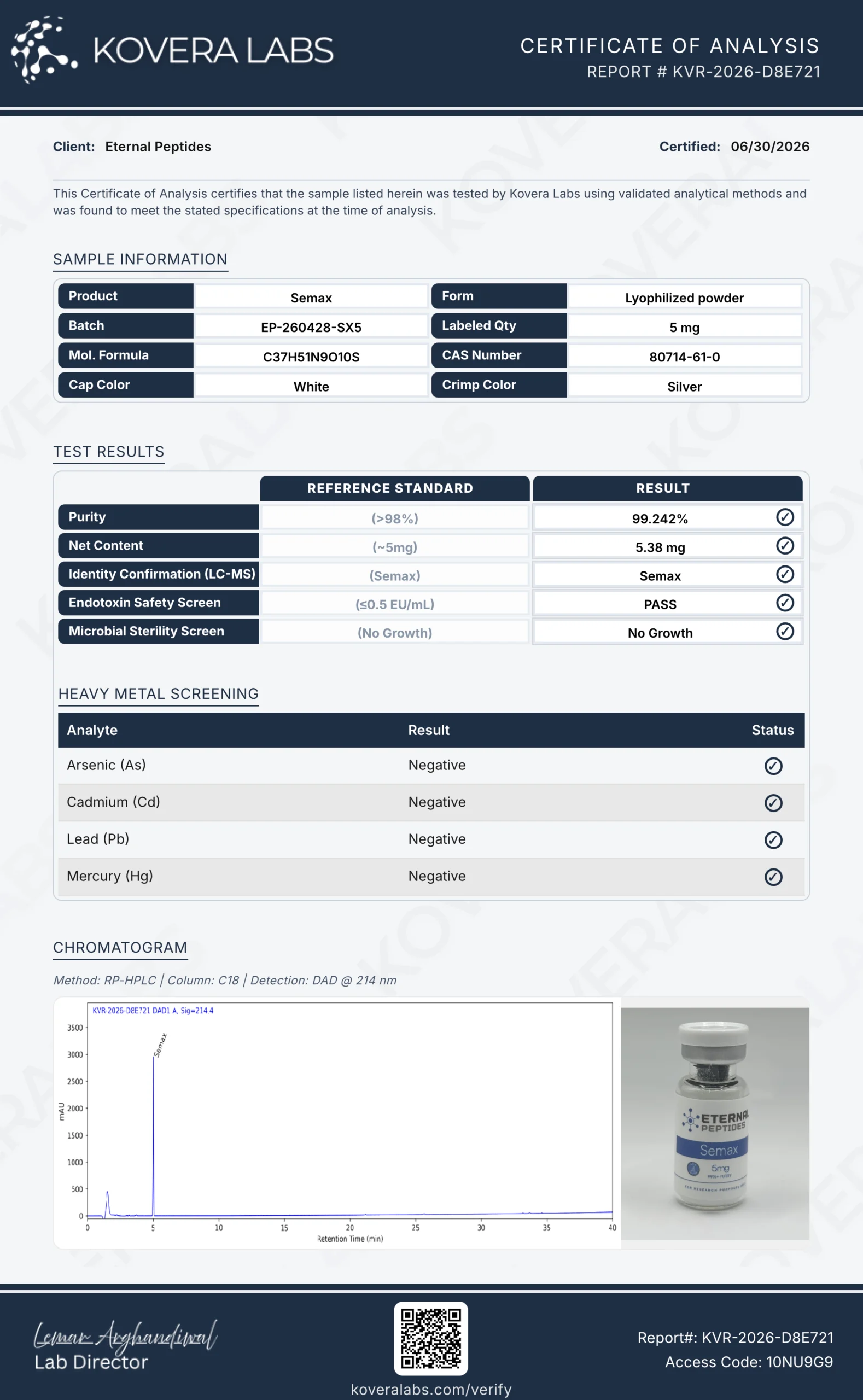
Semax*10vials
Research-grade Semax (Met-Glu-His-Phe-Pro-Gly-Pro) is a synthetic heptapeptide analog of ACTH(4-10) designed for controlled laboratory investigations of BDNF expression, neuroprotection, and ischemia pathway research models. For Research Use Only. Not for human use.
Quantity
-
Detail
What is Semax Peptide?
Semax (Met-Glu-His-Phe-Pro-Gly-Pro, also designated ACTH(4-7)PGP) is a synthetically developed Semax heptapeptide analog of the adrenocorticotropic hormone fragment ACTH(4-10). Developed at the Institute of Molecular Genetics of the Russian Academy of Sciences, Semax retains the core nootropic and neuroprotective effects of the parent hormone while incorporating a C-terminal Pro-Gly-Pro (PGP) tripeptide extension that confers apparent biological stability and an enhanced biological half-life. With a molecular weight of approximately 813 Da and the amino acid sequence Met-Glu-His-Phe-Pro-Gly-Pro, Semax belongs to the melanocortin family of natural regulatory peptides.
Unlike the full-length ACTH molecule, the peptide Semax is completely devoid of hormonal (steroidogenic) activity, meaning it does not stimulate adrenal cortisol production (Eremin et al., 2006). This makes it uniquely suited for research into cognitive function and neuroprotection without the confounding effects of hypothalamic-pituitary-adrenal (HPA) axis activation. Researchers suggest that its nootropic properties make it one of the most versatile peptides available for research and laboratory purposes. In Russia and several former Soviet states, Semax has been investigated in extensive research programs, accumulating a substantial body of preclinical and clinical evidence spanning over three decades.
The semax peptide is typically supplied as a lyophilized powder with purity levels exceeding 99%. Researchers frequently utilize intranasal delivery via nasal spray in experimental models, as the peptide demonstrates excellent bioavailability through nasal mucosa and rapid central nervous system penetration. Research indicates that Semax appeared temporally stable in aqueous formulations under controlled conditions, demonstrating resistance to peptide degrading secreted enzymes present in gastrointestinal and cerebrospinal fluids. Iron Peak Peptides provides Semax in a 15mg vial format, ideal for extended research protocols investigating its neurotrophic, neuroprotective, and cognitive-enhancing properties.
Mechanism of Action: Signal Transduction Pathways
The peptide Semax affects multiple overlapping molecular pathways, establishing a sophisticated and multifaceted relationship between neurotrophic signaling, neurotransmitter modulation, and neuroprotection. Its primary mechanism involves the potent upregulation of brain derived neurotrophic factor (BDNF) and its high-affinity receptor TrkB in key brain regions. This activation of signal transduction pathways downstream of TrkB mediates many of the peptide's observed effects on brain function and neural plasticity.
Research by Dolotov et al. (2006) demonstrated that a single intranasal application of Semax (50 μg/kg) in rats produced a 1.4-fold increase in BDNF protein levels, a 1.6-fold increase in TrkB tyrosine phosphorylation, a 3-fold increase in exon III BDNF mRNA, and a 2-fold increase in TrkB mRNA in the hippocampus. These changes correlated with improved conditioned avoidance reactions, directly linking derived neurotrophic factor BDNF signaling to cognitive performance and the ability to enhance cognitive performance in research models.
Further investigation by Agapova et al. (2007) revealed that Semax induces rapid, gene-specific and region-specific changes in neurotrophin expression across neural pathways in the normal rat brain. Intranasal Semax increased BDNF gene expression in the hippocampus, brainstem, and cerebellum, while also modulating nerve growth factor (NGF) expression in a region-dependent manner. This demonstrates that Semax does not simply produce a generalized neurotrophic response but instead orchestrates a targeted, regionally differentiated pattern of growth factor activation through complex signal transduction pathways.
Blood Brain Barrier Penetration and Bioavailability
A critical factor in the nootropic action of Semax is its ability to cross the blood brain barrier (BBB). Research indicates that the PGP modification enhances the peptide's stability against enzymatic degradation, allowing it to cross the blood brain barrier BBB via receptor mediated transcytosis and other transport mechanisms. Studies examining Semax in human serum and biological fluids have confirmed that the peptide maintains structural integrity longer than the native ACTH(4-10) fragment, with resistance to degradation by naturally released neurotransmitters secreted enzymes and other proteases. This capacity to efficiently penetrate the central nervous system distinguishes Semax from many other naturally occurring peptides that fail to achieve adequate brain concentrations.
Modulation of Neurotransmitter Systems
At the neurotransmitter level, Semax modulates central dopaminergic and serotoninergic brain systems through serotonin dependent pathways and other neurotransmitter systems. Research indicates that Semax influences serotonin metabolism and can augment the effects of psychostimulants on central dopamine release (Eremin et al., 2006). Additionally, the peptide demonstrates protective activity against MPTP-induced lesions of the dopaminergic system in animal models (Levitskaya et al., 2004). The peptide's interaction with the opioid system and its influence on excitatory and inhibitory signals within neural circuits further contribute to its broad neurological profile. These findings highlight the role of Semax in modulating both excitatory and inhibitory signals that govern neural communication and synaptic balance.
Anti-Inflammatory and Anti-Apoptotic Mechanisms
In models of cerebral ischemia, Semax operates through additional anti-inflammatory and anti-apoptotic pathways. Proteomic analysis by Sudarkina et al. (2021) showed that Semax upregulates phosphorylated CREB (a key transcription factor for neuronal survival) in subcortical structures while simultaneously downregulating pro-inflammatory markers MMP-9 and c-Fos, as well as active JNK (a pro-apoptotic kinase). This dual action—activating protective pathways while suppressing destructive ones—represents a sophisticated neuroprotective mechanism of protective or corrective action that distinguishes Semax from single-target agents. Genome wide transcriptional analysis further confirmed that Semax modulates hundreds of genes related to immune response, vascular function, and neurotransmission following ischemic injury, altering gene expression across multiple functional categories (Medvedeva et al., 2014).
Research Applications
Cognitive Enhancement and Memory
Semax has demonstrated significant effects on learning and memory processes in numerous preclinical research models. The peptide's ability to increase hippocampal BDNF levels and activate the brain derived neurotrophic factor/TrkB signaling cascade is directly linked to enhanced synaptic plasticity—the molecular basis of learning and memory formation. In behavioral assessments conducted on animal models, Semax-treated animals exhibited increased memory recall and a distinct increase in conditioned avoidance reactions, demonstrating improved associative learning (Dolotov et al., 2006). Studies suggest that Semax may enhance motivation and cognitive functions through its combined neurotrophic and dopaminergic actions.
The peptide also modulates selective attention and may influence brain development, making it a subject of significant interest in cognitive enhancement research. Researchers investigating nootropic compounds frequently compare Semax with other cognitive-enhancing peptides such as Selank, which shares some neurotrophic properties but acts through distinct anxiolytic pathways.
Neuroprotective Effects in Ischemic Stroke
One of the most extensively studied applications of Semax involves its neuroprotective effects in cerebral ischemia and ischemic stroke models. In a controlled clinical trial involving 30 patients with acute hemispheric ischemic stroke, Gusev et al. (2001) demonstrated that including Semax in intensive therapy influenced the rate of restoration of damaged neurological functions, with increased regression of general cerebral and focal motor disorders. A later clinical and electrophysiological study of 110 post-stroke subjects confirmed that Semax administration increased plasma BDNF levels, accelerated functional recovery, and improved motor performance outcomes on the Barthel index scale (Gusev et al., 2018).
At the molecular level, genome-wide RNA-Seq analysis in the rat transient middle cerebral artery occlusion (tMCAO) model—a standard model of rat brain focal ischemia—revealed that Semax suppressed inflammatory gene expression and activated neurotransmitter-related genes (Filippenkov et al., 2021). The peptide Semax affects the expression of genes related to the immune and vascular systems, demonstrating its capacity to alter gene expressions across inflammatory, vascular, and neurotransmitter pathways simultaneously. Clinical trials semax peptide research continues to expand our understanding of its neuroprotective mechanisms in ischemic conditions.
Traumatic Brain Injury Research
Beyond ischemic stroke, emerging research has investigated the role of Semax in traumatic brain injury models. The peptide's ability to upregulate brain derived neurotrophic factor and nerve growth factor, suppress neuroinflammation, and modulate apoptotic cascades makes it a candidate for studying neuroprotective strategies following mechanical brain damage. In traumatic brain injury research models, the same neurotrophic mechanisms activated by Semax in ischemia models—including BDNF/TrkB signaling and anti-inflammatory gene regulation—are considered relevant for promoting neural repair and functional recovery. Researchers studying neuroprotection often examine Semax alongside other protective peptides such as BPC-157 and Pinealon.
Dopaminergic System Support and Neuroprotection
Semax has shown protective effects against neurotoxin-induced damage to the brain's dopaminergic system. In research by Levitskaya et al. (2004), MPTP neurotoxin administration in rats decreased motor activity and affected physical and emotional reactivity, increasing anxiety-like behaviors. Daily intranasal Semax exposure at 0.2 mg/kg significantly reduced the severity of MPTP-induced behavioral disturbances. The protective mechanism involves both modulation of dopaminergic function and the peptide's broader neurotrophic properties, suggesting a comprehensive protective or corrective action against dopaminergic neurodegeneration.
Behavioural and Neurochemical Alterations in Neonatal Models
Research has investigated how Semax modulates behavioural and neurochemical alterations in developmental neuroscience. Studies that expose neonatal murine models to Semax have observed changes in neurotransmitter profiles and behavioral outcomes. In neonatal anxiety models, Semax exposed models demonstrated altered stress response patterns compared to the control group. Research examining neonatal deprivation adolescent rats found that Semax influenced behavioral recovery and neurochemical alterations in serotonergic and dopaminergic systems.
Particularly noteworthy is research on early life fluvoxamine exposure and its interaction with neuropeptide systems. Studies on murine models aged through neonatal periods examined how Semax modulates the long-term consequences of early pharmacological interventions. The control group appeared to exhibit expected developmental trajectories, while neonatal murine models receiving Semax showed modified behavioral outcomes and altered neurochemical profiles, suggesting that the peptide may exert protective or corrective action during critical neurodevelopmental windows.
Physical and Emotional Reactivity
The influence of Semax on physical and emotional reactivity has been documented across multiple experimental paradigms. In stress response studies, Semax modulated behavioral indices of anxiety and exploration, potentially through its effects on serotoninergic brain systems and serotonin dependent pathways. Behavioral assessments conducted in rodent models revealed that Semax can exhibit increased memory recall alongside improvements in emotional regulation, suggesting that the peptide simultaneously influences cognitive and affective neural circuits.
Mood Regulation and Cognitive Disorders
Research into mood regulation has revealed that Semax influences multiple neurotransmitter systems implicated in affective states. The peptide's modulation of serotonin metabolism, dopamine signaling, and BDNF expression positions it as a subject of interest for researchers studying cognitive disorders and mood-related conditions in preclinical models. Studies on semax exposed models suggest that its influence on serotoninergic brain systems may contribute to anxiolytic-like effects observed in behavioral paradigms. Researchers investigating mood regulation frequently study Semax alongside Selank, which offers complementary anxiolytic mechanisms.
Immune Modulation and Gene Expression
Beyond its neurotrophic effects, Semax demonstrates significant immunomodulatory properties. Genome wide transcriptional analysis by Medvedeva et al. (2014) revealed that the peptide Semax affects the expression of genes related to immune and vascular systems in the ischemic rat brain, including genes governing the vascular system and inflammatory cascades. The peptide modulates inflammatory signaling cascades, including suppression of pro-inflammatory markers and activation of protective immune responses.
Research suggests that this dual neurotrophic-immunomodulatory profile involves altering gene expression across multiple functional gene categories simultaneously. Studies have documented Semax's effects on the contractile and mitochondrial apparatus of cardiac tissue, where investigations to protect murine heart models demonstrated decreased arterial blood pressure and cardioprotective gene expression changes. This broader immunomodulatory and vascular profile is explored further in peptide research examining KPV and Thymosin Alpha-1 for complementary immune-modulating mechanisms.
Published Research Studies
1. Dolotov et al. (2006) — BDNF/TrkB Activation in Hippocampus: Published in Neuroscience Letters, this study demonstrated that a single intranasal application of Semax (50 μg/kg) produced a maximal 1.4-fold increase in brain derived neurotrophic factor protein levels and a 1.6-fold increase in TrkB tyrosine phosphorylation in the rat hippocampus. BDNF exon III mRNA levels increased 3-fold. The authors concluded that the peptide Semax affects cognitive function by modulating the hippocampal BDNF/TrkB system (PMID: 16996037).
2. Gusev et al. (2001) — Clinical Trial in Acute Ischemic Stroke: A controlled clinical trial enrolling 30 patients with acute hemispheric ischemic stroke compared Semax-augmented intensive therapy against conventional treatment in 80 control subjects. Semax increased the regression of general cerebral and focal motor disorders. Effective daily doses were 12 mg for moderate strokes and 18 mg for severe strokes over 5-10 day treatment courses (PMID: 11517472).
3. Filippenkov et al. (2021) — Genome-Wide RNA-Seq in Cerebral Ischemia: Published in Genes (Basel), this study used RNA sequencing to evaluate Semax's effects in the rat tMCAO model of rat brain focal ischemia. The genome wide transcriptional analysis revealed that Semax significantly suppressed inflammatory gene expression while simultaneously activating neurotransmitter system genes, providing transcriptomic evidence for its neuroprotective mechanisms (PMID: 33418449).
4. Sudarkina et al. (2021) — Protein Expression Profile in Ischemia-Reperfusion: Published in the International Journal of Molecular Sciences, this study confirmed Semax's neuroprotective action at the protein level. In the rat tMCAO model, Semax upregulated protective CREB phosphorylation in subcortical structures while downregulating pro-inflammatory MMP-9, c-Fos, and pro-apoptotic JNK, demonstrating coordinated suppression of inflammation and cell death pathways (PMID: 34201112).
5. Levitskaya et al. (2004) — Neuroprotection in MPTP Dopaminergic Lesion Model: Published in Neuroscience and Behavioral Physiology, this study showed that daily intranasal Semax (0.2 mg/kg) reduced the severity of MPTP-induced behavioral disturbances in rats, including decreased motor activity and increased anxiety. The authors attributed these effects to Semax's combined dopaminergic modulation and neurotrophic action (PMID: 15341218).
6. Medvedeva et al. (2014) — Immune and Vascular Gene Expression: Published in BMC Genomics, this genome wide transcriptional analysis demonstrated that the peptide Semax affects the expression of genes related to immune and vascular systems in rat brain focal ischemia. The study documented changes across hundreds of genes, revealing a broad transcriptional response encompassing immune, vascular, and neurotransmitter pathways (PMID: 24669864).
Dosage Protocols in Research
The following describes dosages used in published research studies and is for research reference only. This is not medical advice. This product is intended for research and laboratory purposes only and is not for human consumption.
In preclinical animal research, the most commonly reported intranasal dose of Semax is 50–200 μg/kg body weight in rat research models. Single intranasal applications of 50 μg/kg were sufficient to produce significant increases in BDNF and TrkB expression in the hippocampus (Dolotov et al., 2006). For neuroprotection studies involving the MPTP dopaminergic lesion model, daily intranasal administration of 0.2 mg/kg was employed (Levitskaya et al., 2004). In studies designed to expose neonatal murine models to the peptide, adjusted dosing protocols accounted for developmental stage and body weight.
In published clinical research studies, significantly higher doses have been utilized. In the acute ischemic stroke trial by Gusev et al., effective daily doses ranged from 6,000–18,000 μg/day (6–18 mg/day), with 12 mg/day for moderate severity cases and 18 mg/day for severe cases administered over 5–10 day courses (Gusev et al., 2001). Post-stroke rehabilitation studies employed a standard regimen of 6,000 μg/day for 10-day courses with 20-day intervals (Gusev et al., 2018).
For reconstitution, Semax lyophilized powder should be dissolved in bacteriostatic water or sterile saline. Researchers commonly prepare solutions at concentrations suitable for precise volumetric dosing. Our reconstitution guide provides detailed instructions applicable to research peptide preparation. All dosing protocols should be determined by qualified researchers according to their specific experimental requirements.
Storage and Handling
Proper storage of Semax is essential for maintaining peptide integrity and ensuring reproducible research results. In its lyophilized (freeze-dried) powder form, Semax should be stored at -20°C or colder for long-term preservation, where it remains stable for 24 months or longer. Studies have confirmed that Semax appeared temporally stable under appropriate storage conditions. For shorter storage periods of up to several weeks, refrigeration at 2–8°C is acceptable. The lyophilized powder should be protected from light, moisture, and repeated temperature fluctuations.
Once reconstituted, Semax solutions should be stored at 2–8°C (refrigerated) and used within 30 days for optimal stability. For extended storage of reconstituted peptide, aliquoting into single-use volumes and storing at -20°C is recommended to avoid repeated freeze-thaw cycles, which can degrade the peptide. Use sterile technique during reconstitution and handling to prevent microbial contamination.
When preparing Semax for experiments, allow the sealed vial to equilibrate to room temperature before opening to prevent moisture condensation on the lyophilized powder. Reconstitute slowly by directing the solvent down the side of the vial rather than directly onto the powder, and gently swirl rather than vortex to avoid denaturing the peptide.
-
Customer ReviewsNo comments